


.png)
MEET EXPO AT IMEX 2026 / Expo 2031 CEO Joins Beyond the Spotlight: Rethinking Mega Event Legacy for Host Communities

October 5, 2026
Legacy Is Not What Comes After: Rethinking the Long-Term Value of Mega Events
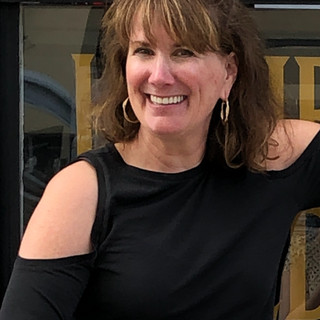
By Wendy Meadley, CEO & Chair, Expo 2031 Minnesota USA
Ahead of IMEX 2026 in Las Vegas, where Wendy Meadley will participate in a conversation on mega-event legacy, she shares a simple proposition: the most important measure of a major event may not be what happens during it but what changes because it happened.
Major events are exceptionally good at creating deadlines.
There is an opening date. A closing date. A construction schedule. A programming calendar. A ticketing strategy. A communications plan.
Thousands of decisions converge around one immovable moment: OPENING DAY.
But I increasingly believe we are starting the conversation with the wrong date.
Instead of beginning with opening day, what if we began ten years after closing?
What should the host community look like then?
What infrastructure should residents still be using?
What businesses should have grown?
What industries should be stronger?
What new skills should exist within the workforce?
What tourism products should still be attracting visitors?
What international relationships should still be producing opportunities?
And how should the world's understanding of that destination have changed?
Those questions lead to a very different way of thinking about major events.
Don't Ask What the Event Leaves Behind
One of the ideas I'll bring to IMEX next week is:
“Don't ask what the event leaves behind. Ask what changed because the event happened.”
Those are two very different questions.
“What did we leave behind?” naturally directs us toward physical assets: buildings, transportation, public spaces and infrastructure.
Those investments matter enormously.
But the impact of a major event can, and should, extend much further.
Perhaps a local business became an international supplier.
Perhaps a university partnership became a permanent research program.
Perhaps a temporary visitor experience became a new tourism product.
Perhaps an event-driven workforce initiative created an enduring talent pipeline.
Perhaps international participants became long-term trading, cultural or institutional partners.
Perhaps an emerging industry gained a global demonstration platform.
Perhaps residents began seeing their own community differently.
Those changes may never appear on a site plan.
But they may ultimately represent some of the most valuable outcomes the event creates.
The Event Has an End Date. The Legacy Shouldn't.
My second proposition is equally simple:
“The event has an opening date and a closing date. The legacy shouldn't.”
Major events create an unusual concentration of resources.
For a relatively brief period, a host community has a deadline, investment, political attention, international visibility, visitor demand, media attention and convening power all operating simultaneously.
That combination is rare.
The opportunity is to use it deliberately.
Rather than thinking about the event as the destination, we can think about the event as an accelerator.
What might normally take a city, region or industry 15 years to accomplish could potentially be accelerated because an event creates the reason, deadline and platform to act now.
That changes the fundamental legacy question.
Instead of asking:
What will remain after the event?
We can ask:
What future are we trying to create and what can this event accelerate?
Planning a Layered Legacy
This thinking has led me toward what I call Planning a Layered Legacy.
Legacy is not one thing.
It is a series of interconnected outcomes that can be intentionally designed across at least seven dimensions:
PLACE / infrastructure, buildings, transportation, public realm, landscape and land use.
PEOPLE / workforce, youth, education, volunteers, skills and community participation.
ECONOMY / businesses, entrepreneurship, investment, procurement, jobs and new markets.
INDUSTRY / innovation, research, commercialization, supply chains and sector development.
DESTINATION / tourism products, attractions, hospitality, events, visitation and destination brand.
RELATIONSHIPS / commercial, diplomatic, academic, cultural, governmental and institutional networks.
IDENTITY / how residents understand their community and how the world understands the destination.
The important point is that these should not become seven disconnected legacy initiatives.
Together, they describe the future place we are trying to create.
And that future should influence decisions being made years before opening day.
Start Ten Years After the Event
Imagine beginning a major-event planning process with a workshop set in the future.
It is ten years after closing.
The temporary structures are gone. The crowds have gone home. The global media has moved on.
Now ask:
What exists today that would not have existed or would have taken much longer to exist without the event?
Answer that question across Place, People, Economy, Industry, Destination, Relationships and Identity.
Then work backward.
What investments would be required?
Which partners need to be involved?
Which programs should begin before the event?
Which assets need permanent operating models?
Which temporary programs should have pathways to permanence?
What should be measured before the event so we can actually demonstrate change afterward?
Suddenly, legacy is no longer the final chapter of the event plan.
Legacy becomes one of the inputs used to write the event plan.
Who Has the Keys?
There is also a very practical side to this conversation.
My third IMEX proposition is:
“If we don't know who has the keys the morning after closing, we haven't finished the legacy plan.”
I mean that both literally and figuratively.
Who operates the venue?
But also:
Who owns the tourism product?
Who continues the workforce initiative?
Who maintains the international partnerships?
Who commercializes the innovation?
Who funds the community program?
Who maintains the data?
Who continues the research?
Who measures whether the promised outcomes actually happened?
A legacy initiative without an owner is an aspiration.
A legacy initiative with an owner, operating model, funding strategy and measurement framework has a chance to become permanent.
That means the organizations responsible for the long-term outcome should not be introduced at the end of the event.
They should help design it.
The Temporary Event as a Prototype of the Future
There is another opportunity I find particularly exciting.
A major event can become a temporary prototype of the future city or destination.
For a few months, hosts have permission to experiment.
They can test mobility systems, digital infrastructure, accessibility models, public spaces, landscapes, food systems, visitor experiences, sustainability initiatives, community programming and new technologies.
For a brief period, the host can essentially say:
This is a version of the place we could become.
Legacy then becomes more than preservation.
It becomes adoption.
Which things worked?
Which should continue?
Which should scale?
Which should migrate into everyday community life?
That may be one of the most powerful roles major events can play over the next decade.
Applying the Thinking to Expo 2031 Minnesota USA
These ideas are very much influencing how we think about Expo 2031 Minnesota USA.
A six-month international horticultural exposition provides an extraordinary platform but six months cannot be the ultimate measure of success.
Our responsibility is also to think about what can exist because those six months happened.
That means thinking early about permanent public assets, horticulture and agriculture innovation, tourism development, international relationships, community participation, technology, business opportunities and the long-term evolution of the site and region.
It means asking not simply what visitors will experience in 2031, but what residents, businesses, industries and visitors might still experience years later.
And it means being willing to judge our work against a much longer timeline.
The Morning After Closing
Every major event eventually reaches the same moment.
The final visitor leaves.
The cameras turn off.
The temporary infrastructure begins coming down.
And someone has the keys.
For those of us planning major events today, perhaps our responsibility is to spend much more time thinking about that morning.
Not because it represents the end of the event.
But because it represents the beginning of the test.
What changed because we were here?
Who carries it forward?
And ten years from now, can we point to things that exist because this event happened?
Those may ultimately be much more important measures of success than anything that happens between opening and closing day.
Next week at IMEX 2026 in Las Vegas, I look forward to joining colleagues from across the global events industry to continue that conversation.
Because the event has an opening date and a closing date.
The legacy shouldn't.
About Wendy Meadley
Wendy Meadley is CEO and Chair of Expo 2031 Minnesota USA and is developing Planning a Layered Legacy, a framework for approaching major-event legacy across seven interconnected dimensions: Place, People, Economy, Industry, Destination, Relationships and Identity. Her work explores how the temporary concentration of investment, attention, partnerships and global engagement created by major events can accelerate lasting community, economic, industry and destination development.
About Expo 2031 Minnesota USA
Expo 2031 Minnesota USA is the first A1 International Horticultural Exposition planned for the United States. Scheduled for May through October 2031 in Minnesota, the Expo is being developed under the theme Human / Nature — Where Humanity & Horticulture Meet.
The international exposition will bring together horticulture, agriculture, technology, tourism, business, government, international participants and communities around how humanity and the natural world can shape the places and systems of the future. Expo 2031 is being planned through a legacy-first approach that considers the permanent economic, community, destination, industry and place-based value the event can help accelerate.


Comments